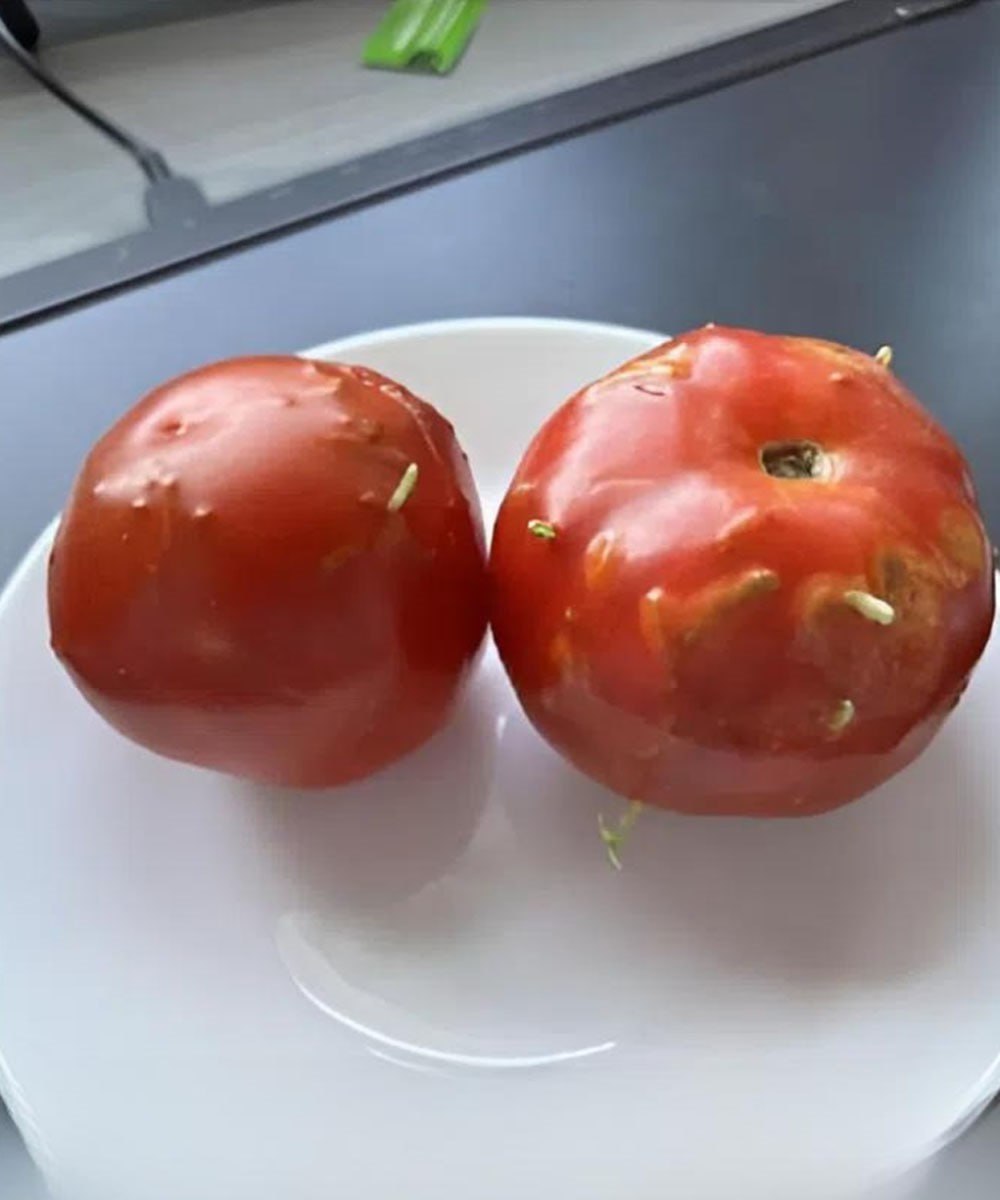
It started as an ordinary morning in the kitchen—coffee brewing, sunlight slipping through the curtains, and a bowl of fresh tomatoes sitting on the counter. I had bought them the day before, perfectly red and firm, planning to use them for a simple salad.
But something felt off.
A few of the tomatoes looked… damaged.
At first, I thought it was just bruising from transport. One had a small crack, another had a soft dark spot near the stem. Nothing unusual, I told myself. Produce isn’t perfect.
Still, something made me pause.
When I picked one up, I noticed a faint smell—not rotten, but slightly different, almost earthy in a strange way. I decided to cut it open just to check.
That’s when the unexpected discovery began.
Inside, instead of the usual uniform red flesh, there were unusual pale streaks and irregular patterns. Almost like veins running through the tomato. At first, I assumed it was simply overripening or a storage issue.
But then I noticed something even stranger: a second tomato had the same internal pattern… and a third.
Now I was curious rather than concerned.
I started searching online, expecting to find a simple explanation—maybe a known plant disease or storage defect. What I discovered surprised me: tomatoes can develop internal “white core” or “vascular browning” due to temperature stress during growth or sudden changes in watering conditions. It doesn’t always affect taste, but it changes the internal structure in unusual ways.
In some cases, it’s linked to uneven ripening. In others, it’s caused by the fruit being exposed to heat waves or inconsistent irrigation while still on the plant.
So the “damage” wasn’t dangerous—it was a hidden story of how the tomato grew.
But the real twist came later.

Soak Your Feet in Vinegar Once a Week and Watch These 9 Health Problems Disappear

Thumb ring: a powerful symbol that many are unaware of.

The 2 powerful techniques that you can apply at home to remove bleach stains

“Clove Tea: Benefits, Recipes, and Precautions”

What is Kalanchoe?