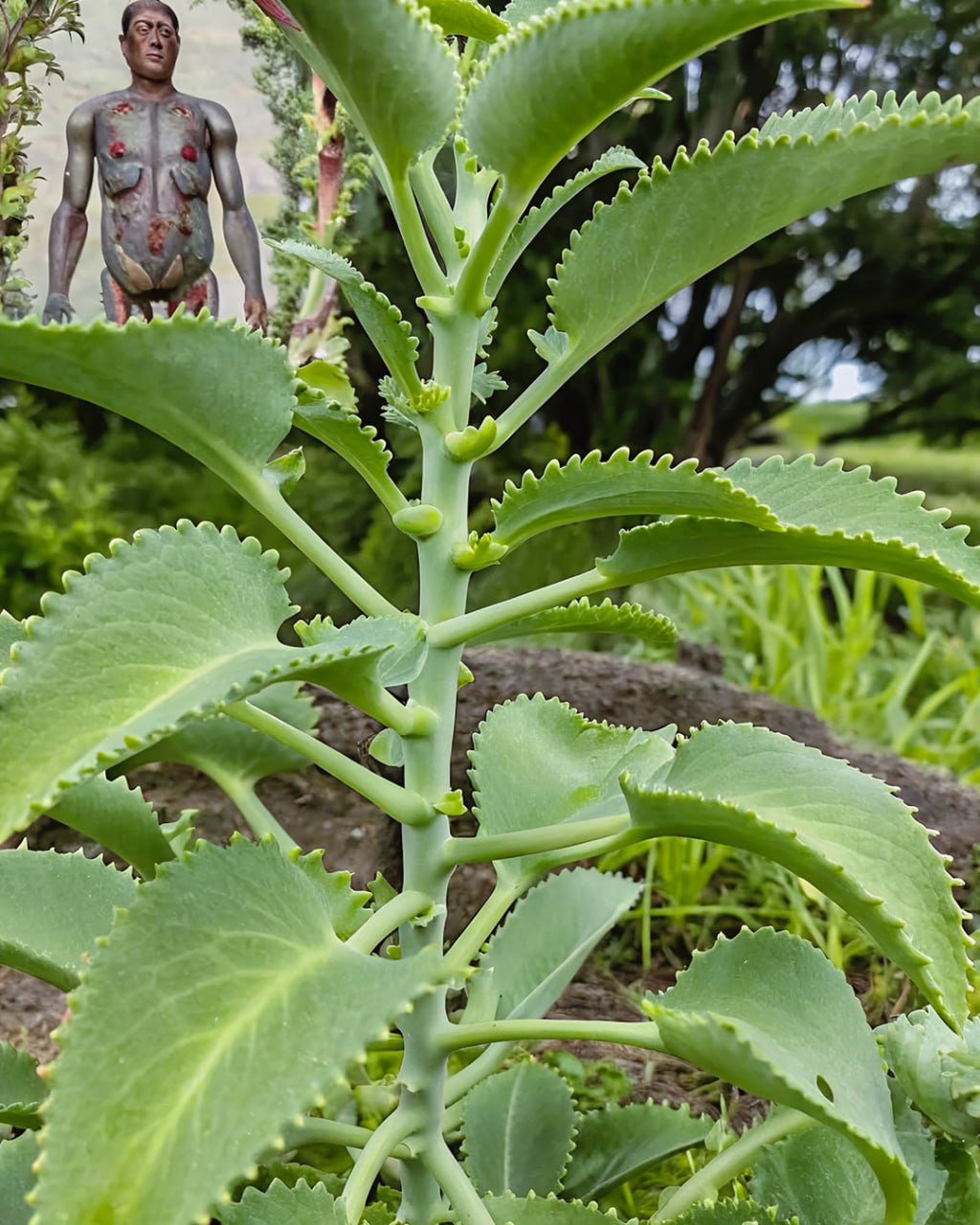
Kalanchoe is a group of succulent plants (thick, water-storing leaves) commonly kept as decorative houseplants. Some popular types include:
- Kalanchoe pinnata
- Kalanchoe daigremontiana
They are easy to grow and very resistant.
Why people call it a “treasure”
1. Traditional medicinal use
In some traditional medicine systems, Kalanchoe leaves are used for:
- Minor wound healing
- Skin irritation
- Inflammation relief
- Cough remedies (in some cultures)
However, these uses are based on tradition, not strong modern clinical evidence.
2. Contains bioactive compounds
The plant contains compounds like flavonoids and bufadienolides, which have shown:
- Anti-inflammatory activity in lab studies
- Antimicrobial effects in some experiments
But these are mostly lab results, not confirmed medical treatments in humans.
3. Easy to grow and survive
It is considered a “treasure” by plant lovers because:
- It grows easily indoors
- It needs very little water
- It multiplies quickly
Important warnings (very important)
- Not all Kalanchoe species are safe to consume
- Some contain compounds that can be toxic if eaten in large amounts
- It is not a substitute for medical treatment
- No strong scientific evidence proves it cures serious diseases
Bottom line
Kalanchoe is a useful and interesting ornamental plant with some traditional medicinal history, but the idea that it is a “hidden cure treasure” is mostly exaggerated. Its real value is in gardening, mild traditional use, and biological interest—not miracle healing.