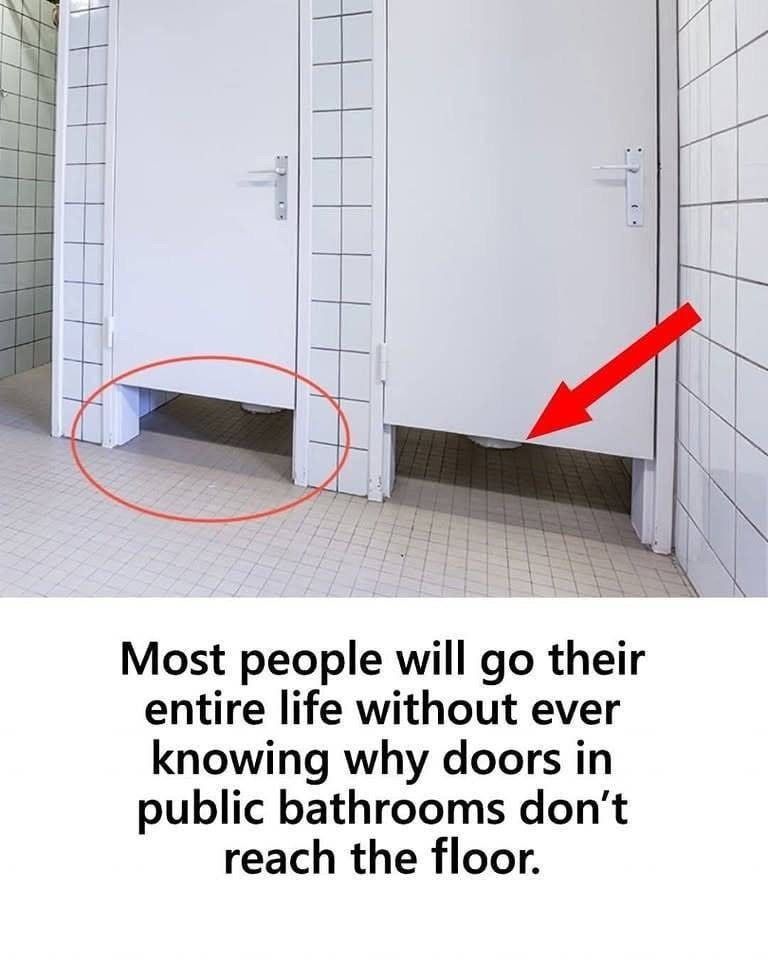
If you've ever used a public restroom, you've probably noticed that the stall doors usually stop well above the floor, leaving a noticeable gap underneath. While this design may seem strange or inconvenient, it's actually the result of several practical considerations involving safety, maintenance, cost, and accessibility.
Here's why most public bathroom doors don't reach the floor.
1. They Improve Safety
One of the primary reasons for the gap is safety. If someone inside a stall experiences a medical emergency, such as fainting or becoming unconscious, the space beneath the door allows others to see that someone may need help. It can also make it easier for emergency responders to access the stall if necessary.
2. They Make Cleaning Easier
Public restrooms require frequent cleaning. Raised stall doors allow custodial staff to mop and clean the entire floor without opening each stall individually. This design helps maintain hygiene more efficiently, especially in busy facilities such as airports, schools, shopping centers, and office buildings.
3. They Improve Ventilation
The open space beneath the doors promotes air circulation throughout the restroom. Better airflow helps reduce humidity and odors while allowing ventilation systems to work more effectively, which can also discourage the growth of mold and mildew.
4. They Help Detect Problems
The gap makes it easier for staff to notice issues such as flooding, leaks, vandalism, or suspicious activity. It also allows them to determine whether a stall is occupied without having to knock repeatedly.
5. They Reduce Construction Costs
Floor-to-ceiling stalls require more materials, stronger structural support, and more complex installation. Standard partitions with open space at the bottom are less expensive to manufacture, install, and maintain, making them a practical choice for high-traffic public facilities.
6. They Can Discourage Misuse
Although privacy remains important, partially open stall designs may discourage activities unrelated to restroom use, such as vandalism, smoking, or occupying a stall for long periods. This is one factor that architects and facility managers sometimes consider when selecting restroom layouts.
Are All Public Bathroom Doors Like This?
No. Many modern offices, upscale restaurants, hotels, and some airports are installing full-height or nearly floor-to-ceiling partitions that provide greater privacy while still meeting safety and accessibility requirements. These designs are becoming more common as user expectations evolve.
The Bottom Line
The gap beneath public restroom doors is not a design flaw. It serves several practical purposes, including improving safety, simplifying cleaning, enhancing ventilation, reducing construction costs, and helping facility staff monitor and maintain the restroom. While many people would prefer more privacy, the traditional design remains common because it balances functionality, maintenance, and public safety.