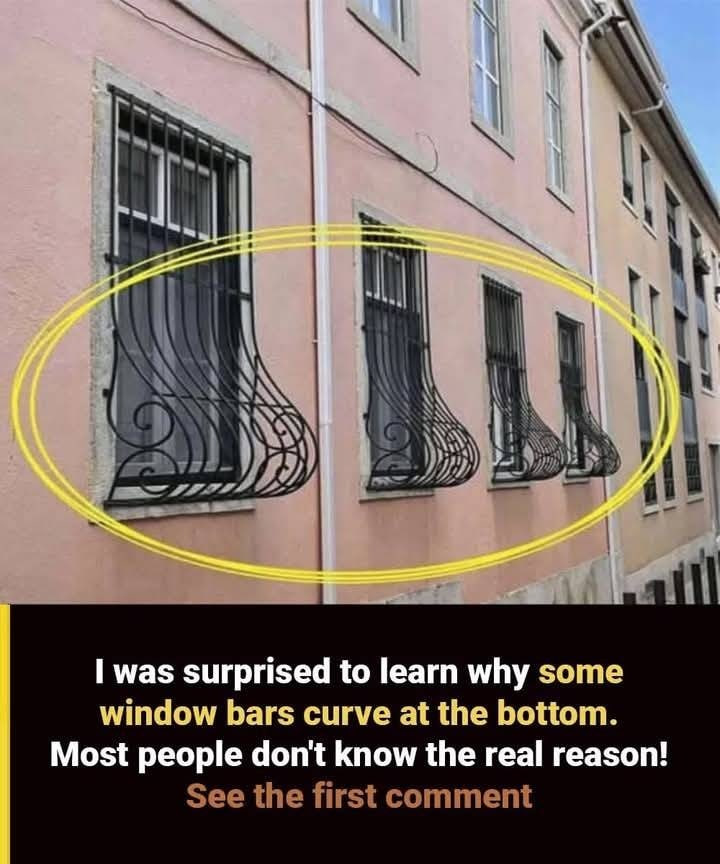
If you've ever walked through older neighborhoods, historic cities, or even modern residential areas, you may have noticed a curious architectural feature: window bars that bulge or curve outward from the building. At first glance, these curved metal structures might seem purely decorative, but their purpose goes far beyond aesthetics.
The outward-curving design of window bars has been used for centuries in different parts of the world, serving a combination of practical, security, and lifestyle functions. While many people assume they are simply an artistic choice, the real reasons behind them are both clever and surprisingly useful.
One of the primary purposes of outward-curving window bars is to create additional space. In apartments or homes with limited interior room, the curved section acts as a small extension beyond the window. This extra space allows residents to place flower pots, herbs, or decorative plants outside the window without risking them falling to the street below. In densely populated urban areas where balconies are rare or too expensive to build, this feature provides a simple alternative.
Another important function is improved ventilation. Before the widespread use of air conditioning, homeowners relied heavily on natural airflow to keep interiors comfortable. Curved window bars made it easier to leave windows open while maintaining security. The additional space around the window encouraged better air circulation and allowed occupants to enjoy fresh air without worrying about unauthorized entry.
Security is perhaps the most obvious reason for window bars in general, but the curved design adds an extra layer of practicality. Residents can open shutters or windows outward while still benefiting from the protection of the bars. In some cases, the expanded section makes it more difficult for intruders to reach the actual window opening, creating a small buffer zone between the exterior and interior.
In several countries, these outward-curving bars are often referred to as "window cages" or "potbelly bars." The name comes from their rounded appearance, which resembles a protruding belly. Historically, they became especially popular in cities where homes were built close together and outdoor space was limited. Families used them to grow small gardens, store household items temporarily, or even cool food before refrigeration became common.
The design also offers benefits for pets. Many homeowners use the extra space to create a safer area where cats can sit near an open window and enjoy sunlight and fresh air without escaping. Modern versions are sometimes specifically designed as enclosed window perches for pets.
Architecturally, curved window bars contribute to the character of a building. Wrought iron craftsmen often incorporated intricate patterns, scrolls, and decorative details into the bars, transforming a functional security feature into a work of art. In historic districts throughout Europe, Latin America, North Africa, and other regions, these elegant metal structures remain an important part of local architectural identity.