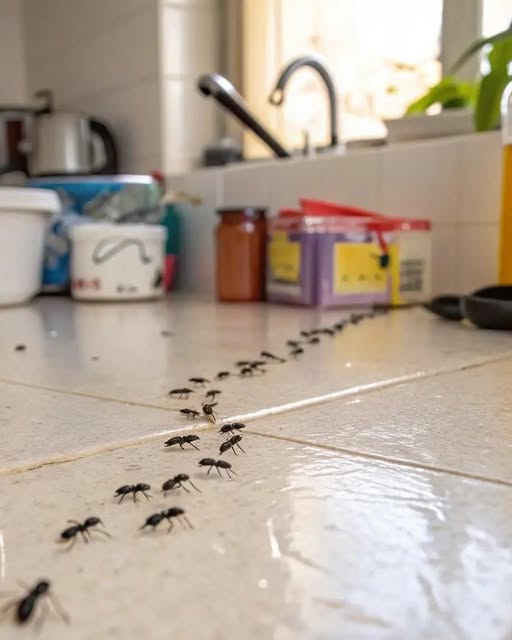
Inspect windows, doors, and wall cracks.
Why it helps:
Blocking access prevents new ants from entering.
Common entry points include:
- Small wall cracks
- Gaps around pipes
- Window frames
- Door thresholds
7. Use Ant Baits
Commercial ant baits contain food mixed with a slow-acting insecticide.
Why it helps:
Worker ants carry the bait back to the colony, helping eliminate the source rather than just the ants you see.
8. Keep Pet Food Off the Floor
Do not leave pet food out all day.
Why it helps:
Pet food is rich in proteins and fats that attract many ant species.
9. Try Natural Deterrents
Some people use:
- Cinnamon
- Peppermint oil
- Lemon juice
- Vinegar
Why it helps:
Strong scents may disrupt ant trails and discourage ants from entering certain areas, although effectiveness varies.
10. Call a Professional if the Problem Persists
If ants keep returning despite cleaning and prevention efforts, the colony may be large or hidden within walls.
Why it helps:
Professional pest-control experts can identify the species and target the nest more effectively.
The Bottom Line
Ants usually enter kitchens because they have found food, water, or both. The most effective solution is to remove what attracts them, erase their scent trails, seal entry points, and maintain good kitchen hygiene. By addressing the cause rather than just the visible ants, you can greatly reduce the chances of another infestation.